The Treatment I Trusted When Medication Wasn’t Enough
As a doctor, I saw medications and vitamins fail for brain fog and memory loss — until a natural treatment explained what was really happening.
The explanation surprised even me.
If You’re Searching for Memory Loss and Brain Fog Treatment, There’s Usually a Reason.
Many people notice early warning signs:
- Walking into a room and forgetting why they went there
- Losing words mid-sentence and avoiding conversations because of it
- Feeling mentally overwhelmed by simple daily decisions
- Becoming more irritable or impatient with family without meaning to
- Doubting their own memory and second-guessing what they just did
So they do what makes sense. They search for treatments. They ask about medication. They consider vitamins. When answers don’t add up, the problem isn’t effort — it’s explanation.

What Actually Happens Before Memory Loss Gets Worse
Brain fog is often the first sign of disrupted neural signaling — long before diagnosis.
The brain works through constant communication.
Thoughts, words, recall — all depend on clear signaling.
When those signals become inefficient, the brain compensates.
That compensation feels like fog, confusion, or mental fatigue.
Medication and vitamins may temporarily boost performance,
but without addressing signal disruption, results rarely last.
This overlooked mechanism explains why so many treatments fall short.
This method has helped over 17,402 people
That’s why:
- Brain cell communication gets disrupted
- Mental signals become slower and weaker
- Vitamins struggle to deliver real results
This Is How Memory Decline Quietly Takes Hold.
It doesn’t start with a diagnosis — it starts with moments people dismiss.
Losing Pieces of Your Own Story
Memory loss rarely announces itself.
It begins by stealing moments — names, conversations, memories — until parts of your own story feel distant or unfamiliar.
Not gone.
Just harder to reach.
Becoming a Burden Without Realizing It
As memory issues grow, loved ones often step in quietly — repeating things, reminding you, making decisions “just to help.”
Most people don’t realize what’s happening
until independence has already begun slipping away.
Struggling With Simple Daily Tasks
Memory decline often shows up in everyday life — not in dramatic moments.
Missing steps. Forgetting sequences. Losing confidence in simple decisions you used to trust.
That loss of confidence can be harder than the memory lapses themselves.
But this doesn’t have to be where the story ends.
As researchers tried to understand why some people experience memory decline while others don’t, they began studying a small group known as “superagers” — people over 70 with unusually sharp memory.
Most people notice these signs — but don’t understand what they mean until much later.
How Mental Clarity Progresses with This Treatment — From Chaos to Consistency
For many people, mental clarity develops in recognizable stages — and understanding where you are helps explain what comes next.
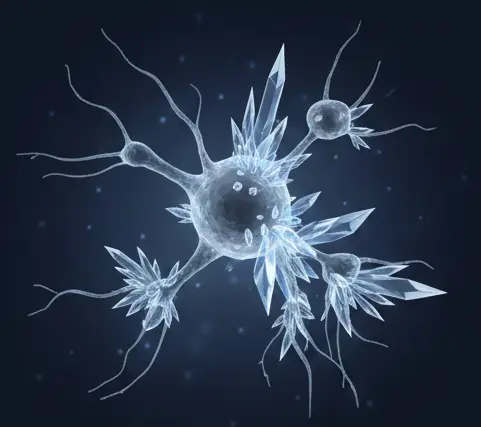
STAGE 1
THE
CHAOS
Neuron signals become inconsistent.
Information feels harder to organize.
Confusion appears more often — especially under stress.
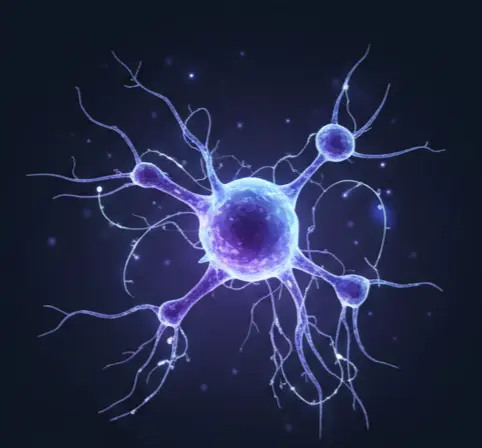
STAGE 2
THE DISRUPTION
The brain begins attempting to organize information more deliberately.
Mental effort becomes noticeable.
Focus and recall feel inconsistent — but no longer completely chaotic.
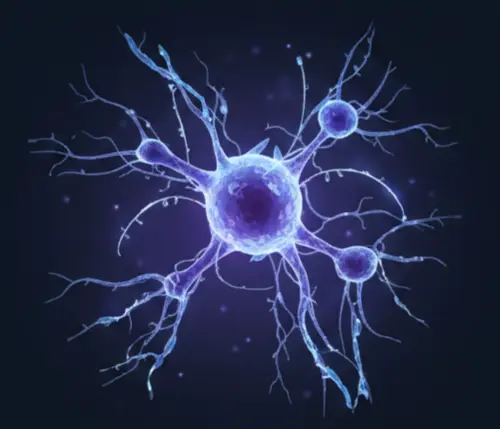
STAGE 3
CONNECTION RETURNS
Neural communication becomes more efficient.
Words come easier.
Mental flow improves without forcing concentration.
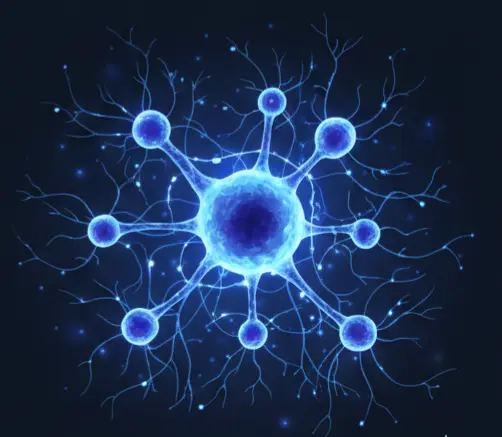
STAGE 4
CLARITY RESTORED
The brain operates with greater consistency.
Recall feels natural again.
Confidence replaces constant mental effort.
What stage are YOU in right now?
Most people never learn which stage they’re actually in —
or how progression really happens.
The explanation makes the pattern clear.
THEY SUSPECTED IT DECADES AGO... BUT PROVED IT IN 2023 (AND NOW BIG PHARMA IS IN DAMAGE CONTROL)
In 2023, a landmark Mayo Clinic study with 17,402 participants
confirmed what researchers suspected for years: toxic sugar
crystals are destroying your brain’s neurons.
But instead of making headlines, the findings were immediately
challenged by pharmaceutical companies.
Why? Because the natural solution costs less than $2/day —
and they can’t patent it.
17.402
brains analyzed over time
74%
improvement once the pattern was addressed*
$84B
still spent yearly managing symptoms
CLASSIFIED DOCUMENT #M-4419-C:
“Neurological analysis confirms: excessive glucose crystallization on neural pathways directly correlates with accelerated cognitive decline. Test subjects showed 74% improvement in memory recall after crystal dissolution protocol. Pharmaceutical intervention showed negligible results.”
— Mayo Clinic Internal Report, 2023 (LEAKED)
This Mayo Clinic study was never meant to go public…
(Watch Before They Take This Site Down)
They Thought It Was ‘Just Forgetfulness’ — Until the Explanation Changed Everything
Real people.
Different moments of doubt.
The same realization after watching the explanation.

“I was terrified. I forgot my grandson’s name right in front of him. I saw it in his eyes… pity. My own grandson feeling SORRY for me. That’s when I decided to try this. Today, 6 weeks later, I remember everything — birthdays, old recipes, even jokes my wife used to tell. My family says I’m ‘back’. And they’re right”
— Mark T., 62. Texas

“I was one step away from accepting a spot in a ‘memory care facility’ (they don’t call it a nursing home, but it is). My kids were already selling my house. I felt defeated. But my daughter-in-law begged me to try this first. ‘Just 30 days, Mom.’ I agreed. Today, 4 months later, I’m living alone, driving, cooking Sunday dinners for the family. My kids cried when we cancelled that place. So did I. Out of relief.”
— Susan L., 53, Arizona
“I blanked during a board presentation. Couldn’t remember the numbers I’d just reviewed that morning. My VP had to save me. That night, I wondered if this was it. If I was done. My wife found this and convinced me to try it. ‘You’re only 51, Rob.’ Three months later, I’m sharper than my 40s. I remember every client name, every detail. Last week, I closed the biggest deal of my career. My team keeps asking what changed.”
— Robert K., 51. Florida
Most people don't regret starting the treatment.
They regret not starting it sooner.
It will either confirm what you suspect — or explain what no one else has.
Health Content and Information Disclaimer:
The information presented on this page is strictly for educational and informational purposes only. It is not intended to diagnose, treat, cure, or prevent any disease and should not be construed as medical advice or a substitute for consultation with a licensed healthcare professional. All claims and references to studies or discoveries are based on published research and are presented solely as a discussion of science and nutrition. Individual results may vary. Consult your physician before starting any new supplement, diet, or exercise program.
Copyright @ 2025 | All Rights Reserved
Scientific References:
- Abdelhalim, A. (2021). The effect of Mentha Piperita L. on the mental health issues of university students: A pilot study. Journal of Pharmacy & Pharmacognosy Research, 9(1), 49–57. https://doi.org/10.56499/jppres20.932_9.1.49
- Dang, F., Jiang, Y., Pan, R., Zhou, Y., Wu, S., Wang, R., Zhuang, K., Zhang, W., Li, T., & Man, C. (2018). Administration of Lactobacillus paracasei ameliorates type 2 diabetes in mice. Food & Function, 9(7), 3630–3639. https://doi.org/10.1039/c8fo00081f
- Dehghan, P., Pourghassem Gargari, B., & Asgharijafarabadi, M. (2013). Effects of high performance inulin supplementation on glycemic status and lipid profile in women with type 2 diabetes: A randomized, placebo-controlled clinical trial. Health Promotion Perspectives, 3(1), 55–63. https://doi.org/10.5681/hpp.2013.007
- Douda, D. (2017). Mayo clinic minute: Is Alzheimer’s type 3 diabetes? Mayo Clinic.
- Fedrigo, O., Pfefferle, A. D., Babbitt, C. C., Haygood, R., Wall, C. E., & Wray, G. A. (2011). A potential role for glucose transporters in the evolution of human brain size. Brain, Behavior and Evolution, 78(4), 315–326. https://doi.org/10.1159/000329852
- Fonteles, A. A., Melo, C., de, C., Paula, A., Regina, M., Diego, F., Rodrigues, P., & Matos, G. (2016). Rosmarinic acid prevents against memory deficits in ischemic mice. Behavioural Brain Research, 297, 91–103. https://doi.org/10.1016/j.bbr.2015.09.029
- Fruit Growers News. (2020, September 17). Study: Eating strawberries often may reduce Alzheimer’s dementia risk.
- Guo, L., Xiao, P., Zhang, X., Yang, Y., Yang, M., Wang, T., Lu, H., Tian, H., Wang, H., & Liu, J. (2021). Inulin ameliorates schizophrenia via modulation of the gut microbiota and anti-inflammation in mice. Food & Function, 12(3), 1156–1175. https://doi.org/10.1039/D0FO02778B
- Hanafy, D. M., Burrows, G. E., Prenzler, P. D., & Hill, R. A. (2020). Potential role of phenolic extracts of mentha in managing oxidative stress and alzheimer’s disease. Antioxidants, 9(7), 631. https://doi.org/10.3390/antiox9070631
- Harvard Health Publishing. (2019, November 9). Added sugar: Where is it hiding?
- Harvard Health Publishing. (2023, March 22). Probiotics may help boost mood and cognitive function.
- Herrlinger, K. A., Nieman, K. M., Sanoshy, K. D., Fonseca, B. A., Lasrado, J. A., Schild, A. L., Maki, K. C., Wesnes, K. A., & Ceddia, M. A. (2018). Spearmint extract improves working memory in men and women with age-associated memory impairment. The Journal of Alternative and Complementary Medicine, 24(1), 37–47. https://doi.org/10.1089/acm.2016.0379
- Mao, J.-H., Kim, Y.-M., Zhou, Y.-X., Hu, D., Zhong, C., Chang, H., Brislawn, C. J., Fansler, S., Langley, S., Wang, Y., Peisl, B. Y. L., Celniker, S. E., Threadgill, D. W., Wilmes, P., Orr, G., Metz, T. O., Jansson, J. K., & Snijders, A. M. (2020). Genetic and metabolic links between the murine microbiome and memory. Microbiome, 8(1), 53. https://doi.org/10.1186/s40168-020-00817-w
- John, S. K., Chandrapragasam, V., & Dey, P. (2021). Impact of gut microbiome Lactobacillus spp. in brain function and its medicament towards Alzheimer’s disease pathogenesis. Journal of Pure and Applied Microbiology, 15(3), 1029–1041. https://doi.org/10.22207/jpam.15.3.02
- Kocsis, T., Molnár, B., Németh, D., Hegyi, P., Szakács, Z., Bálint, A., Garami, A., Soós, A., Márta, K., & Solymár, M. (2020). Probiotics have beneficial metabolic effects in patients with type 2 diabetes mellitus: A meta-analysis of randomized clinical trials. Scientific Reports, 10(1), 11787. https://doi.org/10.1038/s41598-020-68440-1
- Kumari, S. (2020). Effects of sugar crystals on cerebrum. Acta Scientific Dental Scienecs, 4(8), 68–69. https://doi.org/10.31080/asds.2020.04.0889
- Laws, G. L., Hale, J. D. F., & Kemp, R. A. (2021). Human systemic immune response to ingestion of the oral probiotic streptococcus salivarius BLIS K12. Probiotics and Antimicrobial Proteins, 13(6), 1521–1529. https://doi.org/10.1007/s12602-021-09822-3
- Lee, H. L., Kim, J. M., Moon, J. H., Kim, M. J., Jeong, H. R., Go, M. J., Kim, H.-J., Eo, H. J., Lee, U., & Heo, H. J. (2022). Anti-Amnesic effect of synbiotic supplementation containing Corni fructus and Limosilactobacillus Reuteri in DSS-Induced Colitis Mice. International Journal of Molecular Sciences, 24(1), 90–90. https://doi.org/10.3390/ijms24010090
- Huang, S.-Y., Chen, L.-H., Wang, M.-F., Hsu, C.-C., Chan, C.-H., Li, J.-X., & Huang, H.-Y. (2018). Lactobacillus paracasei PS23 delays progression of age-related cognitive decline in senescence accelerated mouse prone 8 (SAMP8) mice. Nutrients, 10(7), 894. https://doi.org/10.3390/nu10070894
- Ni Lochlainn, M., Bowyer, R. C. E., Moll, J. M., García, M. P., Wadge, S., Baleanu, A.-F., Nessa, A., Sheedy, A., Akdag, G., Hart, D., Raffaele, G., Seed, P. T., Murphy, C., Harridge, S. D. R., Welch, A. A., Greig, C., Whelan, K., & Steves, C. J. (2024). Effect of gut microbiome modulation on muscle function and cognition: The PROMOTe randomised controlled trial. Nature Communications, 15(1), 1859. https://doi.org/10.1038/s41467-024-46116-y
- Optibacprobiotics. (2025). Bifidobacterium lactis Bl-04® | Database.
- Propper, R. E., McGraw, S. E., Brunyé, T. T., & Weiss, M. (2013). Getting a grip on memory: Unilateral hand clenching alters episodic recall. PLoS ONE, 8(4), e62474. https://doi.org/10.1371/journal.pone.0062474
- Sagbasan, B. H., Williams, C. M., Bell, L., Barfoot, K. L., Poveda, C., & Walton, G. E. (2024). Inulin and freeze-dried blueberry intervention lead to changes in the microbiota and metabolites within in vitro studies and in cognitive function within a small pilot trial on healthy children. Microorganisms, 12(7), 1501–1501. https://doi.org/10.3390/microorganisms12071501
- Sanger-Katz, M. (2016, May 21). You’d be surprised at how many foods contain added sugar. The New York Times.
- Wang, H., Wang, H., Cheng, H., & Che, Z. (2016). Ameliorating effect of luteolin on memory impairment in an Alzheimer’s disease model. Molecular Medicine Reports, 13(5), 4215–4220. https://doi.org/10.3892/mmr.2016.5052